Aboriginal Cultural Heritage – WA
Community Feedback Site
The following covers the debate around the roll out of the new WA Aboriginal Cultural Heritage Act. It includes links to information, media articles and an all important survey on the costs and challenges around undertaking heritage surveys.
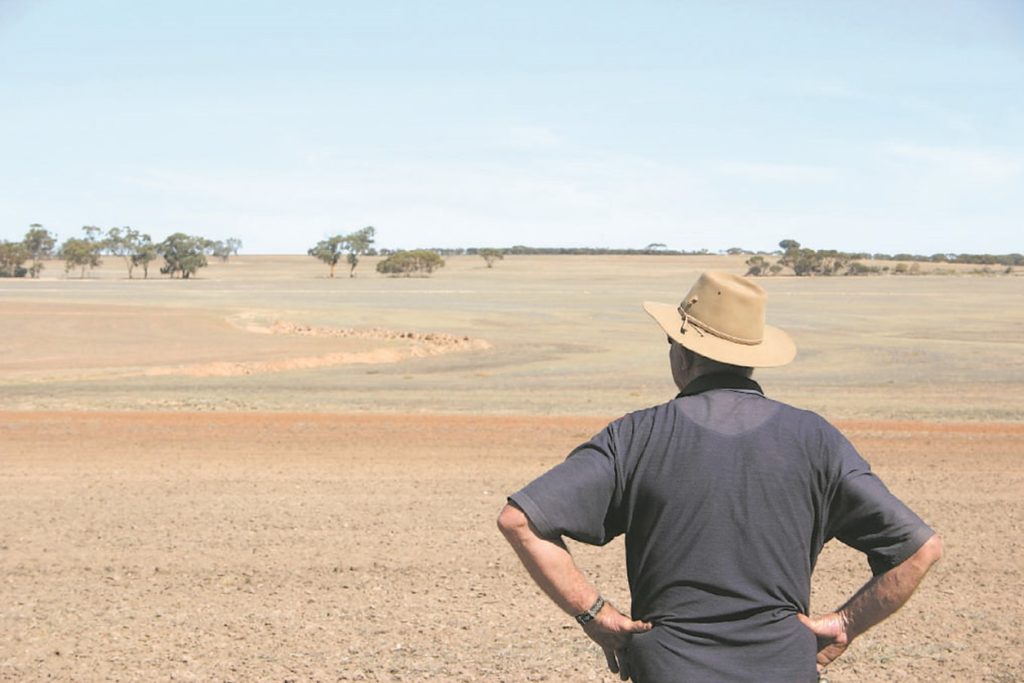
The Western Australian Government has introduced new laws on protecting Aboriginal cultural heritage.
These new laws capture all freehold and leasehold titles over 1100m2 and will impact households, farmers, pastoralists, miners, councils, government departments and developers.
This page is to attempt to build an understanding of how these new laws are impacting private property owners and the community, the costs, time delays, confusion along with the positive stories of fast efficient heritage surveys and the protection of heritage sites.
The page includes relevant media articles and links to information sites along with a survey for those who have had experience in engaging with the government and their Local Aboriginal Cultural Heritage Services (LACHS).
The information will be collated, and relevant material will be published on the site minus any names and addresses of impacted individuals with the ultimate aim of helping landholders to navigate the Act and avoid unforeseen costs.
If you have been impacted, please take this survey
Presentations
Submissions
Fact Sheets, Guidelines and Exemptions
AMEC Hub Material
- https://amec.org.au/ach-resources-hub/
- Due Diligence Assessment checklist
- Preparation and Timetable for the Development of an ACHMP
- Aboriginal Cultural Heritage Management Plan Shell
Farmers Fact Sheet
Aboriginal Cultural Heritage Map
https://espatial.dplh.wa.gov.au/ACHIS/index.html?viewer=ACHIS
Department Contact
Department of Planning; Lands and Heritage (DPLH Dept of Heritage)
Enquiry Number: 08 6551 8002
Email: aboriginalheritage@dplh.wa.gov.au
Regional Offices
Albany
178 Stirling Terrace, PO Box 1108, Albany WA 6331.
Tel: (08) 9892 7333
Albany (Aboriginal Heritage)
178 Stirling Terrace, Albany WA 6331.
Tel: (08) 9892 7333
Broome
Unit 2B, 23 Coghlan Street, Broome WA 6725.
Tel: (08) 9194 3400
Bunbury
Sixth Floor Bunbury Tower, 61 Victoria Street, Bunbury WA 6230.
Tel: (08) 9791 0577
Geraldton
45 Cathedral Ave, Geraldton WA 6530.
Tel: (08) 9920 9604 (Lands) or (08) 9920 9606 (Heritage)
Kalgoorlie
32 Brookman Street, Kalgoorlie WA 6430.
Aboriginal Heritage Tel: (08) 6551 8002
Kununurra
Messmate Building, Kununurra WA 6743.
Tel: (08) 9166 7802
Mandurah
Level 1 – Suite 94, 16 Dolphin Drive, Mandurah WA 6210.
Tel: (08) 9586 4680
South Hedland
Suite 2 First Floor, 5517 Brand Street, South Hedland WA 6722.
Tel: (08) 9160 2250
Fact Sheet for Farmers
Aboriginal Cultural Heritage Act 2021. Information for Farmers and Pastoralists Example Scenarios.
John is replacing a broken fence that got knocked down. He needs to put a new post in, but otherwise is just putting up new fencing wire. What does John need to do under the new Act?
This is a like-for-like activity and as such, is exempt. John can proceed.
Deb wants to install a new fence along already cleared land. She needs to put in all new posts and fencing.
What does Deb need to do under the new Act? If Aboriginal cultural heritage is present, then under the new Act installing or erecting a fence that does not involve clearing is a Tier 1 activity. Deb will have to take all reasonable steps to avoid or minimise harm to Aboriginal cultural heritage.
This may include visiting wa.gov.au/ach-act to undertake a search of Aboriginal cultural heritage listed on the Directory, review maps and existing surveys or may require undertaking a new survey.
If installation of the fence involves clearing, Deb can still proceed with the fence posts as a Tier 1 activity provided that she is not excavating to a depth of more than 0.5m or disturbing more than 10m2 of ground in total.
If there is no Aboriginal cultural heritage on Deb’s property, she will not require approval to install the fence. Approval will also not be required if Deb can avoid any Aboriginal cultural heritage present by relocating the proposed fence line.
Anthony wants to remove a fence between his two paddocks.
He needs to pull out all the posts and remove all the fencing. What does Anthony need to do under the Act?
Anthony can remove his fence posts as planned. This is considered maintenance of infrastructure and does not require approval.
William is about to plant a new crop in his paddock. The paddock has already been used for cropping for many years. What does William need to do under the Act?
William can proceed as planned. As the area of land to be disturbed is within the existing footprint and to the same depth of the existing land use – it is a like-for-like activity and as such, is exempt. Jennifer is putting in a new variety of apples in her commercial orchard. She needs to remove the existing trees and then put in the new trees. She will need to dig a hole 1m wide and 0.5m deep for each tree. What does Jennifer need to do under the Act? Jennifer can proceed as planned. Provided the existing planting was dug to approximately the same depth and width, this is a like-for-like activity and as such, is exempt.
Tim wants to put a new dam on his property. He has identified an area at the bottom of the hillside of his paddock where he will get a good flow of water over the field. He wants the dam to be about 5m deep and will need to drill some 6m deep holes to test before excavating. What does Tim need to do under the Act?
Tim will need to start by undertaking a due diligence assessment in line with the Aboriginal Cultural Heritage Management Code. If there is no Aboriginal cultural heritage on Tim’s property, he will not require approval and can proceed. Tim could also consider if the activity could be carried out in a way that avoids harming Aboriginal cultural heritage, like using an alternative location or alternative water source, in which case no approval would be required. If Aboriginal cultural heritage is present, and there is a risk of harm to that heritage from works to install the dam, Tim will require an approved or authorised Aboriginal Cultural Heritage Management Plan – to be agreed with the local Aboriginal organisation – to proceed lawfully. This is a Tier 3 activity. Fees apply, and approval will be required by the Aboriginal Cultural Heritage Council.
June has noticed some pest cotton bush in some uncleared land on her property. She wants to remove it before it begins to spread to her fields. June wants to physically remove the weeds, so she doesn’t impact on the other vegetation. What does June need to do under that Act?
The first question for June to ask herself is whether Aboriginal cultural heritage is present. If it is not, or it can be avoided, she can proceed without seeking any approval. Further, if June is preventing or minimising irreversible damage to a significant part of the environment, the activity would be exempt. If Aboriginal cultural heritage is present but the risk does not meet the irreversible damage threshold, controlling feral or pest fauna without digging or excavating is a Tier 1 activity and would not require approval. June will need to take all reasonable steps to avoid or minimise harm to Aboriginal cultural heritage. If digging or excavating is required,
June will only need to apply for a permit in the unlikely event that, over the course of one calendar year, she will
• remove more than 4 kg of material (not counting the weeds or flora); • disturb more than 10m2 of ground in total;
• disturb more than 1m2 of contiguous ground; or
• excavate to a depth of more than 0.5 m.
Barry wants to put up a new shed on his farm. The shed is going to be 7m x 12m and will have a dirt floor that will need leveling. What does Barry need to do under the new Act? Barry will need to start by undertaking a due diligence assessment in line with the Aboriginal Cultural Heritage Management Code.
If there is no Aboriginal cultural heritage on Barry’s property, he will not require approval and can proceed. Aboriginal Cultural Heritage Act 2021 If there is Aboriginal cultural heritage on Barry’s property, he could consider if the activity could be carried out in a way that avoids harming Aboriginal cultural heritage, like using an alternative location, in which case no approval would be required. If the activity cannot be carried out in an alternative location, Barry will need to take all reasonable steps to avoid or minimise harm to Aboriginal cultural heritage. He will need to apply for a permit which can be obtained from wa.gov.au/ach-act and carries a once-off $100 administrative fee.
Chris is installing a bore on his property. He needs to drill 12m down to reach the water table. What does Chris need to do under the Act?
If there is no Aboriginal cultural heritage on Chris’s property, he will not require approval under the Aboriginal Cultural Heritage Act 2021. If there is, Chris could consider if the activity could be carried out in a way that avoids harming Aboriginal cultural heritage, like using an alternative location or alternative water source, in which case no approval would be required. If the activity cannot be carried out in an alternative location or by an alternative method, Chris will need to apply for a permit which can be obtained from wa.gov.au/ach-act and carries a once-off $100 administrative fee.
Felicity notices one of her sheep is stuck in a fence on the far side of the paddock. She drives across the paddock to get the sheep out of the fence. Is there anything Felicity needs to do under that Act?
No. Felicity can tend to her sheep.
Clayton wants to create a new a new track through one of his paddocks. The paddock has been used for cropping for many years. He needs to use a grader to create a flat surface with added gravel through the paddock. What does Clayton need to do under the new Act?
If there is no Aboriginal cultural heritage on Clayton’s property, he will not require approval under the Aboriginal Cultural Heritage Act 2021. If Aboriginal cultural heritage is present, no approval would be required if the track does not require clearing. This would be a ‘like for like’ activity as the area of land to be disturbed is within the same footprint and to the same depth of the existing land use. Clayton could also consider if the track can be created in such a way to avoid harming Aboriginal cultural heritage, in which case no approval would be required.
We all have a responsibility to keep protecting one of the oldest living cultures in the world and that’s why we need to improve and streamline how we protect and manage Aboriginal cultural heritage in WA. 8 www.wa.gov.au/ach-act * achimplementation@dplh.wa.gov.au ( (08) 6551 8002 (8:30am – 5:00pm, Monday to Friday)
Media
Farm Weekly Articles
- Private Property Rights speaks louder than Any Voice
- Known Unknown Noongar
- Buti’s heritage is in doubt
- Aboriginal Cultural Heritage – what I know
- Buti Blew it for the Government
- Letter to Tony Buti
- The true cost of cultural heritage
- Minister, on heritage we have a way out
- Letter to Government – changed needed to the Aboriginal heritage act
Paul Murray: New Premier Roger Cook courting disaster on Aboriginal heritage

Paul Murray
The West Australian
Sat, 8 July 2023 2:00AM
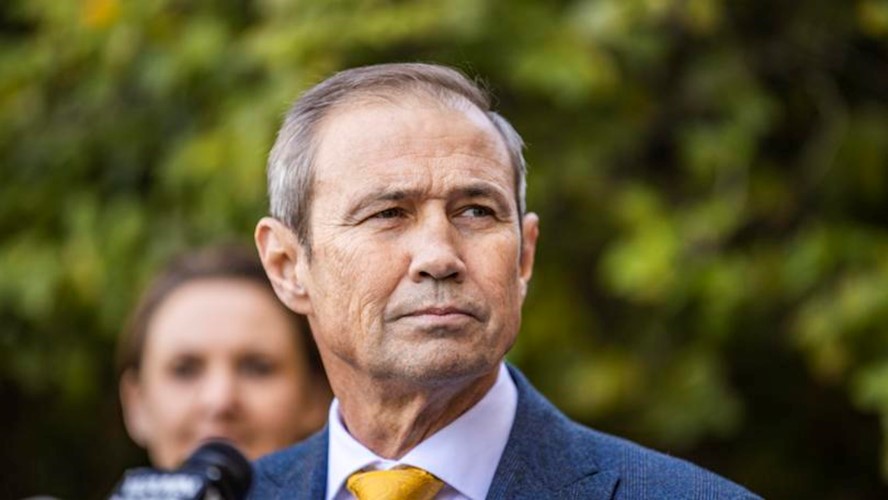
Most importantly for the Cook Labor Government’s new Aboriginal Cultural Heritage Act 2021, which came into effect this month, was a 1998 judgment in the Fejo case. Credit: Kelsey Reid/The West Australian
Sixty thousand years of Aboriginal cultural heritage is a very long time, but it helps if you’ve been around a little bit more than just this decade to understand why the new moves to protect it have come unstuck in WA.
There’s an old saying that the pathway to hell is paved with good intentions.
The desire to protect Aboriginal cultural heritage in WA goes back to a law passed in 1972. The recent Juukan Gorge disaster showed it was easily manipulated.
In fact, since 2010, miners have asked the WA Government for approval to destroy or disturb 463 heritage sites. None was rejected. The archeological site at Juukan — not sacred as so often reported — was one of them.
In 1992, the High Court’s Mabo judgment found that a form of native title existed before the arrival in Australia of European settlers. It is important to note that the old WA Aboriginal Cultural Heritage Act pre-dated that judgment.
The Federal Government a year later passed legislation “to provide a national system for the recognition and protection of native title and for its co-existence with the national land management system.”
What followed that momentous move was a series of High Court judgments which tested and defined the boundaries of the new Native Title Act.
Most importantly for the Cook Labor Government’s new Aboriginal Cultural Heritage Act 2021, which came into effect this month, was a 1998 judgment in the Fejo case.
What the full bench of the High Court found in that case was that native title is extinguished by a grant in fee simple, which is legalese for the issuing of a freehold title.
That title is not only how people in metropolitan parts of WA legally own land, but is also the form of land tenure for most farms in the south of the State.
The High Court’s reason for extinguishment in Fejo was that “the rights that are given by a grant in fee simple are rights inconsistent with the native title holders continuing to hold any of the rights or interests which together make up native title.”
That judgment appears to have been overlooked by those drafting the new ACHA. It replaced the 1972 Act, which pre-dated Fejo, and it extended the scope of Aboriginal cultural heritage to all land over 1100sqm, twice the size of a big suburban block.
It should be obvious that there is a logical inconsistency between the High Court’s decision in Fejo and the extension of indigenous interests on freehold land in the new ACHA.
Whether it is also legally invalid is for others more qualified to judge — but it would be worth testing.
It is only a matter of time before circumstance arise to allow a legal challenge to the broad extension of what amounts to a native title right over land where the High Court has held that it no longer exists.
The ACHA sets up new processes to determine the practice of protecting indigenous culture on freehold land by the formation of Local Aboriginal Cultural Heritage Services. The LACHS allow Indigenous people to effectively assert a native title right on someone else’s land.
This WA law replaces its 1972 predecessor, but its new provisions now seem to transgress the 1992 Federal law and the High Court interpretations of it.
Native title is often described as a “bundle of rights” in land. These include the right to camp, hunt, use water, hold meetings, perform ceremony and protect cultural sites.
So, the system of protecting Indigenous cultural heritage in the new ACHA is clearly an exercise of native title.
In a paper on the effect of native title on freehold land, Professor Stephanie Fryer-Smith, at one time a Native Title Tribunal registrar and pro-Vice Chancellor of Curtin University’s Sydney campus, came to this conclusion about the effect of the Fejo judgment:
“It is now beyond question that our suburban backyards — and our freehold farming and commercial lands — are ‘safe’.”
The paper was written some time ago, but nothing has changed the importance of the Fejo decision for those holding freehold title.
Fryer-Smith said the High Court judges — even the far-Left Michael Kirby — had been emphatic about how freehold “blows away” any other interest in the land.

“In the 1990s developments in the complex law of native title, both common law and statutory, posed significant challenges for the judiciary, the legal profession, native title holders and claimants, and non-indigenous Australians,” she wrote.
“In relation to at least one aspect of native title it can be seen that the common law and legislation converge. The position in relation to freehold is clear: the grant of a fee simple estate excludes the continued existence of native title rights and interests.
“Regardless of what ‘in fact’ occurs on that freehold land — whatever native title rights and customs may actually be practised — in legal terms, native title is permanently extinguished.
“The sweeping changes made to the native title legislation in 1998 indicate a significant shift in political and public attitudes to native title since the ground-breaking decision in Mabo.”
So why wasn’t this picked up when the new legislation was going through the WA Parliament in the past few years?
Former National Party leader Mia Davies explained in an op-ed piece in this newspaper on June 17 about how the McGowan Government operated:
“As an Opposition, we were briefed two days before we were on our feet debating the Bill.
“We were forced to sit until midnight to get through as much of the Bill as possible, and the Government still cut short the debate before we could finish the job of scrutinising the Bill in its entirety. It’s called guillotining, and it is a blunt political instrument to prevent debate or scrutiny.
“The consequence of the red tidal wave that washed over WA at the last election is that the Labor Government uses the Parliament as a big rubber stamp. Over the past six years, they have arrogantly pushed legislation through with little care or thought to the ramifications.”

Former National Party leader Mia Davies explained in an op-ed piece in this newspaper on June 17 about how the McGowan Government operated: Credit: Ross Swanborough/The West Australian
And why is no one protesting that this new WA law and its extension of a form of native title onto freehold land is potentially invalid?
The reality is that most of the land affected by Aboriginal cultural heritage is held as mining tenements, pastoral leases or by the Crown. Native title can legally co-exist with those forms of land tenure, so the freehold inconsistencies don’t arise.
Big mining companies are also used to dealing with heritage issues and have the skills, staff and financial resources to do so. They are unlikely to challenge the new Act.
But anyone holding a freehold parcel of land over 1100sqm also now falls under the new law.
That includes not only farmers, but a market gardener in Spearwood, a horticulturist in the Hills, a winemaker in Margaret River — or someone lucky enough to have a big residential property.
As The West reported on June 29, one frustrated farmer vented his feelings on a public servant explaining the new law to 300 people in Northam:
“We haven’t got, like you’ve got, a nice office tower full of secretarial staff and clerks to look after you and nurse you through things and brief you before you go and do any damn thing that you want to do.
“We can’t go and trawl through (the Act) for hours on end and figure out whether we can or whether we can’t in situations where we’re reacting with weather.”
One lawyer I consulted about this article said the reason the inconsistencies with Fejo have not been pursued in court is because there were so few prosecutions under the old Act. No one needed to care. The LACHS will change that.
He pointed out that many of the Indigenous Land Use Agreements set up under the NTA included the protection of cultural heritage, which puts it squarely into the bundle of native title rights.
So the fact that the new Act extends cultural heritage to a big area of freehold land, and then sets up a new system of LACHS to allow the exercise of a native title right, establishes a novel legal argument.
One potential area for litigation for freehold landowners is in the law governing what is known as “injurious affection.”
Under WA’s Land Administration Act, the State or even the Indigenous group pursuing cultural heritage on freehold land could be sued for compensation if landowners are hindered in their activities.
The new Act was not a kneejerk reaction to the Juukan Gorge disaster, but its rushed passage through the WA Parliament definitely was, ensuring it got no real scrutiny. And it shows.
The decision by Roger Cook to push on with the new law when it became obvious that it was heavily flawed was a dismal start to his premiership and one he will live to regret.
It is only a matter of time before circumstance arise to allow a legal challenge to the broad extension of what amounts to a native title right over land where the High Court has held that it no longer exists.
Arrogant Roger Cook dismisses Aboriginal Cultural Heritage Act concerns
Paul Murray
The West Australian
Sat, 24 June 2023 2:00AM
Roger Cook must have been channelling an inner Albo when he faced his first parliamentary question time as Premier.
Cook was confronted by a request from Opposition Leader Shane Love to postpone the implementation of Labor’s new Indigenous cultural heritage laws because of widespread community unrest.
Love, the leader of the National Party, which holds seats only in regional WA, was responding to one of the biggest protest petitions ever presented to the Parliament, demanding a delay.
Those who signed the petition just wanted their voice heard in Parliament. Love was merely the messenger.
Since his political career began in 2008, Cook hasn’t exactly made a reputation for “fighting Tories” like our illustrious Prime Minister. He’s more likely to be found in a smart suit sipping cocktails at a boardroom soiree.

But, on June 13, the new Premier amped up his inner Albo to the full Rambo, accusing those sitting opposite him of racism for representing the interests of their electors.
“Members, listen for a second,” he said.
“Do you hear that? That is the same dog whistle that has been blown in this Parliament by that side of politics for decades, whether in the mid-1980s when the then Burke government was interested in introducing Aboriginal land rights legislation; the early 1990s when the Federal government was implementing native title legislation, which was vigorously opposed and legislated against by the Court Liberal government; or now, as we make these modest modern changes to the Aboriginal Heritage Act.”
For those not familiar with the term, dog whistling is slang for using coded language to obscure a political message and is often used to allege covert racism.
In other words, he was saying that opposition to the new laws was inherently racist.
“Every time, like a dog returning to its vomit, these guys trot out their straw man arguments to simply distract members of the community and raise these issues in people’s minds,” barked Cook.
While Cook stonewalls, refusing to consider the harm even from intended consequences, his Government looks increasingly unwilling to listen to anyone’s voice but its own.
“They are undermining harmonious reforms that are about the respectful observance of Aboriginal heritage. These laws are not radical. These laws are ready to go.
“The arguments made by the farming industry are noted, but they are not accurate.”
So, regional WA is told that they might have a voice in the Parliament through the Nationals — for the time being — but it won’t be listened to by the executive government.
The Premier condescendingly says that voice will just be “noted”. And Labor’s new electoral laws in WA will strangle it after the next election anyway.
There are clear parallels here with the Voice debate. People with legitimate grounds for opposing the Albanese Government’s proposals are also routinely branded as racist.
And in both cases, the Labor governments involved play down their intentions as “modest” changes, which is demonstrably untrue.
So what’s all the fuss about the new Aboriginal cultural heritage law? WA has had some form of these laws since 1972, but not without controversy.
“Rorting, overcharging, duplication and delays are rife in the Aboriginal heritage approval process that is costing an estimated $100 million a year,” said a report in The West Australian on November 27, 2014.
It was written by Colleen Egan, who is now chief of staff to Attorney-General John Quigley.

“An ‘industry’ of predominantly white consultants has been charging exorbitant fees for survey reports that are sometimes simply cut-and-paste duplicates, according to the State Government,” Egan wrote.
“Ernst & Young surveyed some of WA’s biggest companies, which ‘all raised concerns that the process is open to conflicts of interests and abuse of powers’.”
The E&Y report found the average cost of a heritage application was about $382,800. About $42,000 of that was spent on consultation with Aboriginal elders.
The new law will establish around 40 Local Aboriginal Cultural Heritage Services throughout WA and describes three tiers of activity on any land over 1100sqm which determine when the LACHS have to be consulted, massively expanding the scope of the existing legislation.
Landowners will have to apply for permits from the LACHS before digging new fences, planting trees, clearing tracks or dredging dams.
Penalties for damaging cultural heritage range from $25,000 to $1 million for individuals and $250,000 to $10 million for corporations, as well as 5 years’ jail.
However, no LACHS will be operating when the Act comes into force next month. This is what Indigenous Affairs Minister Tony Buti told the Legislative Assembly on June 14:
“There is an issue with LACHS. Granted I would like there to be more than are accepted at the moment.
“In the Budget, we invested $77 million, plus $10 million on top of that, for LACHS.
“The intention under the Act is there will be a LACHS, and in most cases it will be the prescribed body corporate. It will be the same body. We are funding them to the tune of at least $300,000 a year to help with basic administrative costs and there is a schedule of fees.”
So, if they are the same bodies as existing native title corporations, why the need for $87 million to establish them?
The schedule shows a LACHS consultant — defined as “an Aboriginal person who is recognised within their community as being senior and as having higher levels of knowledge, expertise, skills and authority” — gets $160 an hour, or $1200 per day. Those fees will be paid by the landowner.

If a LACHS chief executive is involved, the charge can be up to up to $280 an hour. Other “expert service providers” can charge $300 an hour. If the work is in a remote area, a 20 per cent loading can apply and travel, accommodation and meal costs can also be billed.
Tier one activities that involve minimal disturbance do not require a landowner to seek a permit from the LACHS, but steps must be taken to avoid or minimise harm.
Any activity involving the removal of more than 4kg of material, disturbing more than 10sqm of ground or excavating more than 50cm will need a LACHS permit.
Under Tier two, up to 20kg of material over 200sqm to a depth of one metre is allowed. More than that invokes Tier Three and much more involved consultations and a management plan.
Buti and Cook have repeatedly said that landowners’ “like for like” activities, such as putting in the same crop or repairing an existing fence, will not need approval, suggesting the changes are minimal and modest.
Their attempts to convince landowners that its business as usual is like Buti’s hapless Federal counterpart Linda Burney repeatedly saying the Voice won’t have the power of veto.
However, it will have the constitutional ability to seek a veto from the High Court, thereby transferring substantial power in this country from the democratically-elected government to non-elected judges.
On the wider operations of the Voice, it didn’t take much to peel the onion open when one question was asked about Australia Day.
All the months of obfuscation and deception got found out, leaving Burney hopelessly exposed.
This is what Fabian socialism looks like. Fabianism is the slow and usually deceptive introduction of socialism by stealth.
It’s why many people believe Labor’s Left can’t be trusted in government. Both Cook and Albanese are from the Left whereas their predecessors have come from Labor’s Right.
Buti’s “like for like” argument falls apart because farmers, for example, don’t just do the same things day after day.

Buti’s ‘like for like’ argument falls apart because farmers, for example, don’t just do the same things day after day. Credit: Iain Gillespie/The West Australian
Their land use is constantly changing in terms of waterways and earth formations — around which Aboriginal cultural heritage might be construed — and that will require far more involvement with LACHS than the government is letting on.
And then there’s the unintended consequences, like the potential impact on future carbon farming, in which the WA Government has already invested $30m and is critical to Labor’s 2030 emissions targets.
“To go and sign up for carbon credits will require a large number of soil samples to be taken across a farm, up to one per 20ha down to 1m plus capturing more than 20kg of soil,” one agriculture sector lobbyist said.
“This moves the activity from a Tier Two to Tier Three which kicks off the whole process of involving the local LACHS with an on-ground heritage survey of the whole farm.
“That could double the cost of doing base line carbon surveys to a 1000ha farm, dissuade farmers from embarking on carbon farming as they might fear the implications of a farm-wide survey which could put part or all of their property into a protected area.
“Many will sit back and wait to see what happens, something the Feds can’t afford as they race towards 2030 and have factored in soil carbon capture as one of the big sinks they will rely on.”
While Cook stonewalls, refusing to consider the harm even from intended consequences, his Government looks increasingly unwilling to listen to anyone’s voice but its own.
‘A modest Indigenous voice to parliament? Take a look out west to consider its far reaching consequences’, writes Peta Credlin

Peta Credlin
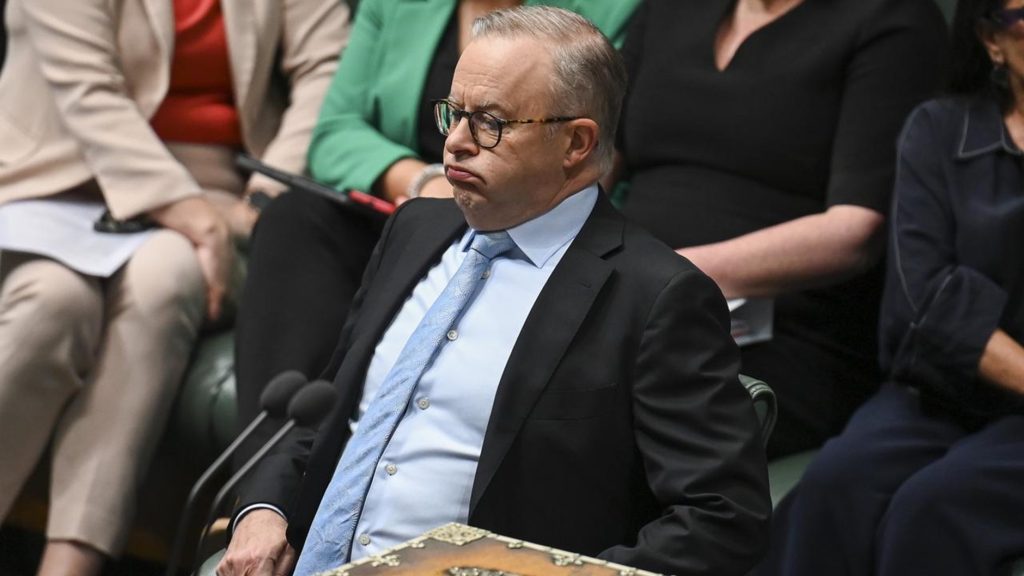
Anthony Albanese during the vote on the Constitution Alteration Bill at Parliament House in Canberra.
Picture: NCA NewsWire / Martin Ollman
12:00AM JUNE 1, 2023
Anthony Albanese’s pitch to Australians for months has been that they should vote for his Indigenous voice to parliament because it will be an important “but modest change”. Only the cat is now out of the bag with his comments in a speech to Indigenous leaders this week declaring “let this be no modest change”.
In the clearest sign yet of what will come, all Australians need to look at the enormous Aboriginal heritage changes about to roll out across Western Australia from July 1. What’s more, these changes will create a whole new land-use approvals regime that circumvents elected officials and subjects the rights of private property owners to Aboriginal heritage assessment.
Especially since the May 2020 destruction of the cave at Juukan Gorge that had been a site of human habitation for more than 40,000 years, Western Australia has been grappling with how better to protect Aboriginal heritage without obstructing reasonable development.
The result is the Aboriginal Cultural Heritage Act, which will start to come into effect next month.
Many of the practices and procedures under this act are still being finalised, but it’s already clear that for most significant developments – instead of applying to local, state and possibly federal governments for approval – there will soon be an additional requirement to have approval from relevant Aboriginal bodies.
The act will establish, according to its memorandum, “a majority Aboriginal advisory body”, the Aboriginal Cultural Heritage Council, “to provide strategic oversight of the Aboriginal cultural heritage regime”.
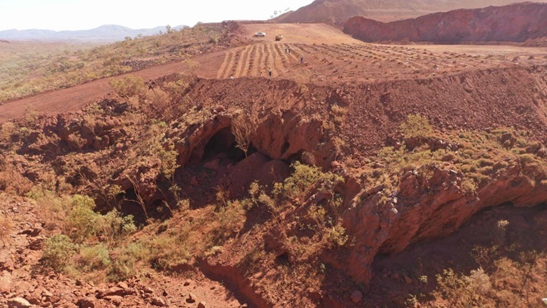
Juukan Gorge in Western Australia, one of the earliest known sites occupied by Aboriginals in Australia.
This will include providing advice to the minister, designating local Aboriginal Cultural Heritage Services and approving cultural heritage permits and cultural heritage management plans.
On any property larger than 1100sq m (about the size of a large suburban block), at least in areas of designated cultural significance, for any significant construction activity there will need to be permits or management plans, depending on the nature of the activity and the nature of the cultural significance. Landholders will need to acquire these from (yet to be established) local Indigenous heritage services.
There are timelines set down for approvals, fees set for heritage assessors and processes for appeal if agreement can’t be reached. While the minister retains ultimate authority over land-use decisions (as was the case with the Juukan Gorge approval), there is a great deal of potential process (and cost) before anything would ever get to the minister’s desk.
The aim, says the memorandum, is to “recognise Aboriginal people’s special connection to country”; to recognise “the fundamental role of Aboriginal cultural heritage in the lives and wellbeing of Aboriginal people”; and to provide “for Aboriginal people themselves to determine what qualifies as Aboriginal cultural heritage and therefore is afforded protection under the legislation”.
The act, it says, provides “a broad definition of Aboriginal cultural heritage” to capture not only its “tangible” but also its “intangible” and its “living” elements.
Again, it’s reasonable enough to accept that there may be some elements of heritage that are merely spiritual and even that there can be new and evolving concepts of what heritage is. The issue, though, is going to be reconciling this with further economic development, especially as the act takes for granted a process of fee for service (from $150 to $450 an hour) in determining just what these might be, and negotiated financial settlements before development might take place with the administration of all this via myriad local Aboriginal elders.
A document produced last year by the big law firm Ashurst states: “Navigating the heritage landscape in project development in WA is going to get more complex over the next 12-24 months.”

The Aboriginal Flag is painted on the beach promenade.
Picture: NCA NewsWire / Jeremy Piper
The act, Ashurst says, “introduces a level of complexity and uncertainty that, in our opinion, renders key aspects … unworkable”.
In particular, Ashurst worries that the local Aboriginal cultural heritage services (that in many cases have yet to be set up or exist only in rudimentary form) will lack “the capacity to function efficiently”, hence creating “massive hurdles” (despite government funding of $77 million set aside for the new regime’s implementation).
As well, the law firm says, the obligation to use “best endeavours … in the context of commercial negotiations and bargaining … will likely be challenging”.
You can bet that will turn out to be a massive understatement.
West Australian farm groups are now mounting a last-minute fight against what the Pastoralists and Graziers Association says is “the biggest attack on private property rights since native title”.
According to the PGA, anything involving ground disturbance of more than 50mm (5cm) will require an individual permit from the local cultural heritage service. This would include “weed control with mechanical equipment”, “construction of new stock yards” and the “installation of new fences”.
A more extensive management plan will need to be approved, the PGA says, for “establishing a new farm … clearing land … contour cultivation … and new forestry plantations”. The PGA is worried that this could be a costly, open-ended process potentially taking months or even years. It says real heritage sites should be protected but not the ones suddenly discovered “just where someone wants to build a new farm road or set of stockyards”.
WA Farmers chief executive Trevor Whittington is particularly concerned at the potential for invented heritage claims to be settled at an unsustainable price. Also, the lack of transparency inherent in a system that turns on cultural heritage but where landowners may not be allowed to know what makes it culturally significant due to “cultural sensitivities”.
Indeed what amounts to cultural heritage can change across time, as the new act makes clear. Yet despite the extensive consultation and protection involved in the new act, because the minister retains ultimate authority, it still has been criticised in some quarters as a “failure to prevent cultural genocide” – suggesting those wanting to restore Aboriginal sovereignty, as if the past two centuries of settlement shouldn’t count, can never be satisfied.
How has it come to this? For one thing, there’s no effective opposition in the WA parliament. With only six Liberal and National MPs in a lower house of 59, not much is going to get effective scrutiny, even if there were a will to do so. For another, with only one metropolitan newspaper, what gets attention is very much the product of just one editor’s interests. At heart, though, this is what happens when unelected and unaccountable officials try to correct a whole system on account of one scandalous mistake (at Juukan Gorge) in ways conforming to current notions of identity politics and political correctness.
What is about to roll out in Western Australia is a micro example of the far-reaching Aboriginal controls that will come with the voice. If it’s established, given its reach into executive government, there’s little doubt that a new class of Indigenous officialdom would be created.
But as for the daily endeavours on which all our livelihoods depend, regardless of ancestry or cultural heritage, these will only get harder with a new and extra layer of Indigenous governance.
This is what happens when a government forgets Bob Hawke’s bicentenary declaration that in this country there must be no “hierarchy of descent” and “no privilege of origin”.
New Aboriginal heritage laws ‘shut down’ tree planting event
By Jenna Clarke
5:48AM JULY 10, 2023
Updated Aboriginal cultural heritage laws in WA have reportedly stopped a tree planting event to commemorate the late Queen Elizabeth II at the weekend.
Geraldton mayor Shane van Styn said a well publicised, planned event to plant trees at Wonthella Bush Reserve – an area damaged by a deliberately lit fire last year – had to be cancelled due to conflict and confusion caused by WA’s new heritage legislation, a week after it came into effect.
Mr van Styn said he “shut down” the project to help mark the late Queen’s Jubilee after a local resident raised last minute concerns regarding the area, which is located about 425km north of Perth.
“Despite checking the site online prior, for any Aboriginal heritage, of which there was none, a respected local knowledge holder shut down proceedings on the basis of ground disturbance and the new Aboriginal Cultural Heritage Act and the ‘significance’ of the site to the family,” Mr van Styn said.
“Their efforts were (also) part of restoring the remnant bush land.
“This is the first use of powers of entry and stoppage we are aware of under the Act, despite technically not being an official Aboriginal Inspector under the Act as no local Aboriginal Cultural Heritage Services has yet been created to appoint them as such. So some confusion is now in play.”
Aboriginal Affairs Minister Tony Buti confirmed to The Australian the Elder acted without authority and has now called for the Department of Planning, Lands and Heritage to “investigate further”.
“The modernised laws did not allow for the Elder to shut down the event,” Mr Buti said. “The modernised laws do not provide authority for anyone to shut down an event.
“It’s important to note that a situation like this could have occurred for the past 50 years under the old legislation – and although rare, it has occurred in the past.
“The modernised laws now provide practical exemptions.
“In this rare event, we understand the Mayor decided to respectfully acknowledge the Elder’s wishes and defer the event,” he said.
The roll out of the new laws, drafted in a bid to prevent another Juukan Gorge disaster, were rushed through WA’s parliament in a matter of days in late 2021 during the pandemic.
The implications of the move went largely unrealised until the release of regulations outlining the details in early April – just three months before the legislation was introduced.
Key documents, such as guidelines for surveys commissioned to identify and manage Aboriginal cultural heritage, were only made public a fortnight before the laws were implemented last week.
The Cook government is also yet to establish the 40 Local Aboriginal Cultural Heritage Services – the planned “one-stop shops” that will consult with traditional land owners, farmers, resource companies and landowners of more than 1100 sqm wishing to alter or make additions to their property, like building a veranda or altering a fence line.
An online petition signed by close to 30,000 people calling for the WA government to delay the roll out of the new laws was ignored.
This incident in Geraldton comes on the eve of federal Indigenous Affairs Minister Linda Burney’s visit to regional WA where she will meet with organisations in rural areas like Albany and Port Hedland to promote the Indigenous voice to parliament.
Aboriginal Cultural Heritage Act: AMEC’s resources hub inundated in first week of new laws

Danielle Le Messurier
The West Australian
Sun, 9 July 2023 3:00PM
Small and mid-tier miners have flooded a resources hub set up by the Association of Mining and Exploration Companies to better explain major changes to WA Aboriginal cultural heritage laws.
Since opening the ACH resources hub on June 30, the day before the laws came into effect, the organisation has received over 765 unique visitors to the page as industry continues to digest the complex legislation
“To put that in context, AMEC has 173 WA explorer member companies, and 22 WA producer members. So that’s quite a lot of traffic,” chief executive Warren Pearce said.
“We’ve got a lot of interest from our own membership but also from outside of our industry as well, and we’ve made it public for that reason.”
AMEC is among 14 organisations invited to sit on a State Government working group to identify issues arising from the implementation of the Aboriginal Cultural Heritage Act.


The Government has copped backlash over the shambolic introduction of the new system from miners, farmers and Indigenous groups, who have expressed concern the legislation is being brought in without appropriate support.
One major issue — and the leading concern for AMEC members — is the absence of Local Aboriginal Cultural Heritage Services, meaning miners will negotiate with traditional owners groups that may not be adequately resourced.
“We need to get those bodies established as quickly as possible because ultimately the new framework won’t work as well without them,” Mr Pearce said.
“The sooner those bodies are set up and industry has one point of contact and a clear consistency in the way in which they operate, that will be beneficial.”
AMEC’s hub contains a range of information to help industry implement the Act, including an Aboriginal cultural heritage management plan template and a due diligence assessment checklist.
Mr Pearce said the organisation was essentially providing a minimum standard to help companies step through the new heritage processes.
“The Government has put a lot of information out on their website, and that’s good, but the totality of the information can be overwhelming,” he said.
There had been a barrage of questions from members in the first week of the new laws, seeking to ensure they meet new requirements, Mr Pearce said. “Hopefully over the next year we’ll be able to continue to see the framework develop and continue to support our members to make this a much easier process. Obviously it’s been a difficult transition,” he said.